What I Wish Visitors Knew Before Their First South Coast Day
A South Coast guide's honest, specific advice before your first day trip from Reykjavík: the driving, the soaking at Seljalandsfoss, the sneaker waves, lunch, and pickup.
 By Björn Einarsson, Iceland South Coast tour guide and local specialist
Before you read on
Most of this list the small-group day tour takes off your plate: the driving, the timing, the pickup and the weather calls. Booking options are at the end. See the booking options ↓
The question I get most often, usually somewhere around the second waterfall, is some version of "why didn't anyone tell me this?" So here is me telling you, before you go, from someone who has run this route down Route 1 more times than I can count and has watched what trips people up. Most of it is not complicated. It is just the handful of things nobody thinks to mention until you are already standing in the spray, cold and surprised.
Here is the whole post in one glance, the mistakes I watch people make and the simple fix for each. Read the rest for the why.
| Common mistake | What to do instead |
|---|---|
| Wearing a light "fashion" waterproof | Bring a proper hooded rain shell and waterproof shoes |
| Expecting a quick hop, not a long loop | Plan for a full day with real driving between stops |
| Turning your back on the sea at Reynisfjara | Stay well back and keep watching the water the whole time |
| Assuming lunch is provided | Bring money and buy your own food in Vík |
| Waiting for door-to-door pickup | Walk to your assigned downtown Reykjavík bus stop, early |
| Turning up expecting to walk on the glacier | Treat Sólheimajökull as a viewpoint unless you booked the ice add-on |
How long is the South Coast day really, and how much of it is driving?
Plan for a full day of about ten hours, and accept that close to five of them are spent driving. Reykjavík out to Vík is roughly 187 km each way along Route 1, about two and a half hours in one direction. No clever routing shortens it, so the drive is genuinely part of the trip, not a delay to it.
This surprises almost everyone, so sit with it before you go. It is a big loop, out and back, and the driving is spread across the day between stops rather than dumped in one block. I have a full breakdown of the Reykjavík to Vík drive time if you want the exact numbers. The practical takeaway is simpler. Sit toward the front if long stretches in a vehicle unsettle you, look at the horizon rather than your phone, and bring snacks and water. The scenery between stops is genuinely good, mossy lava, wide farmland, glaciers hanging over the road, so it is not dead time. It is still time, though, and people who expect a quick hop are the ones who get grumpy by mid-afternoon.
Here is how the day roughly breaks down once you are actually out there. Treat the minutes as approximate, because a good guide flexes them around the weather.
| Stop | Roughly how long | What to prioritize |
|---|---|---|
| Seljalandsfoss | About 30 to 40 min | The path behind the falls, and the hidden Gljúfrabúi nearby |
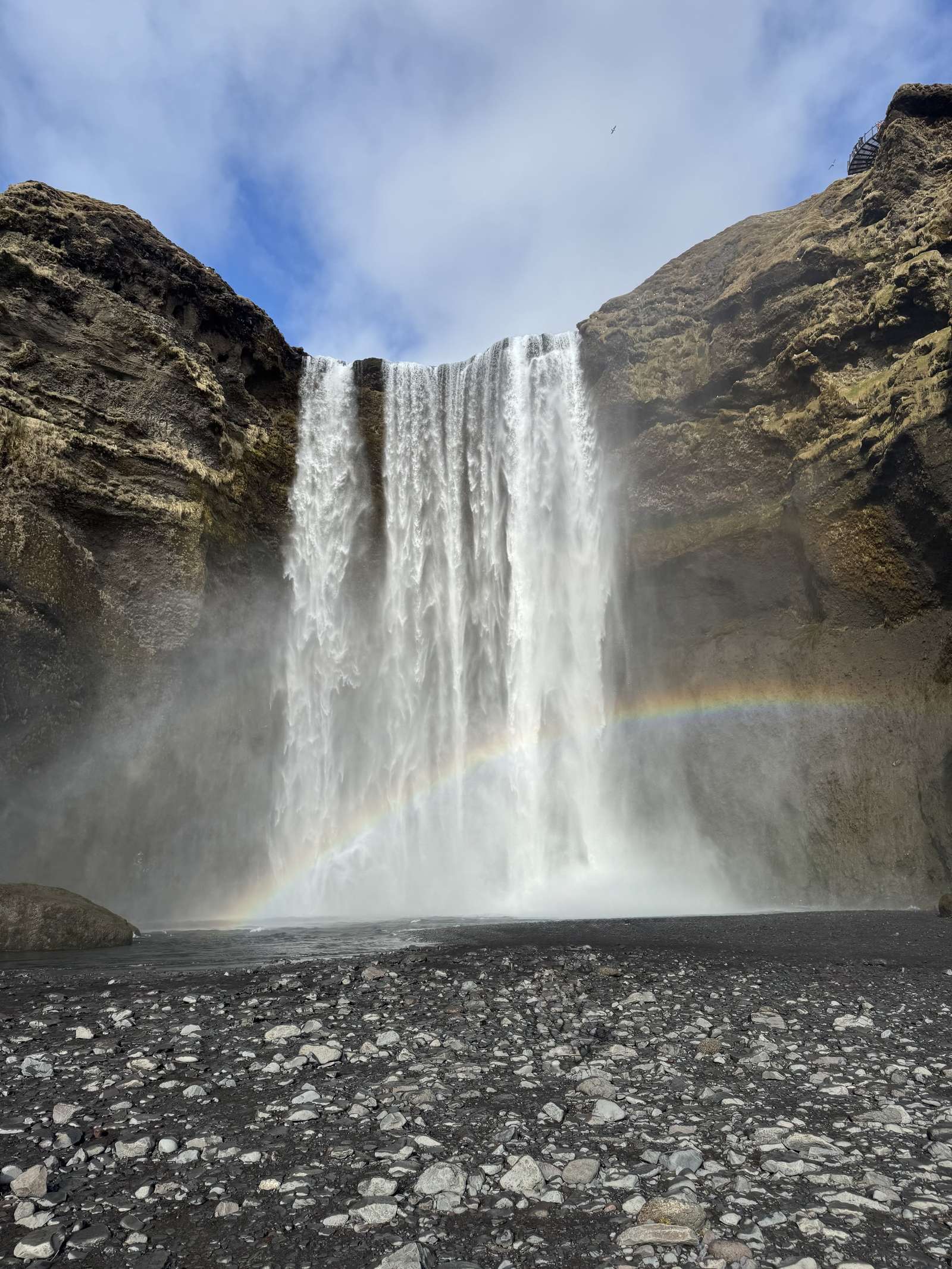
| Skógafoss | About 40 min | The base for the rainbow, then the stairs if you have legs for it |
| Sólheimajökull glacier | About 45 min | The short walk to the viewpoint over the ice tongue |
| Reynisfjara black beach | About an hour, the longest stop | The basalt columns and stacks, watched from well back |
| Vík | About 30 to 45 min | A quick lunch, then the church view over the black beach |
What jacket do you actually need for Seljalandsfoss?
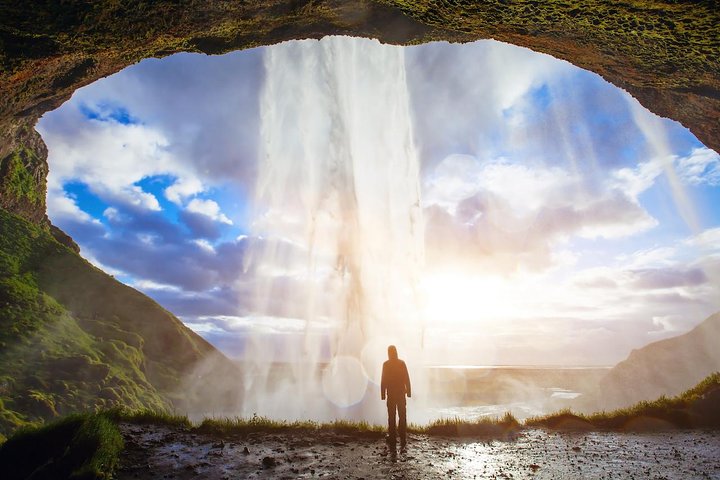
A proper hooded waterproof, not a fashion shell. The path behind Seljalandsfoss soaks you with sideways spray in about ninety seconds, and the same layer earns its keep against wind on the black beach and mist coming off the glacier. Waterproof shoes or boots matter just as much, since the ground there is wet rock and puddle.
The single most common packing mistake is treating "waterproof" as a vibe. Seljalandsfoss settles that argument for you fast. There is a path that goes behind the curtain of water, which is the whole reason people love it, and behind there the spray comes at you from the side. A light shell that beads a little drizzle is not enough.
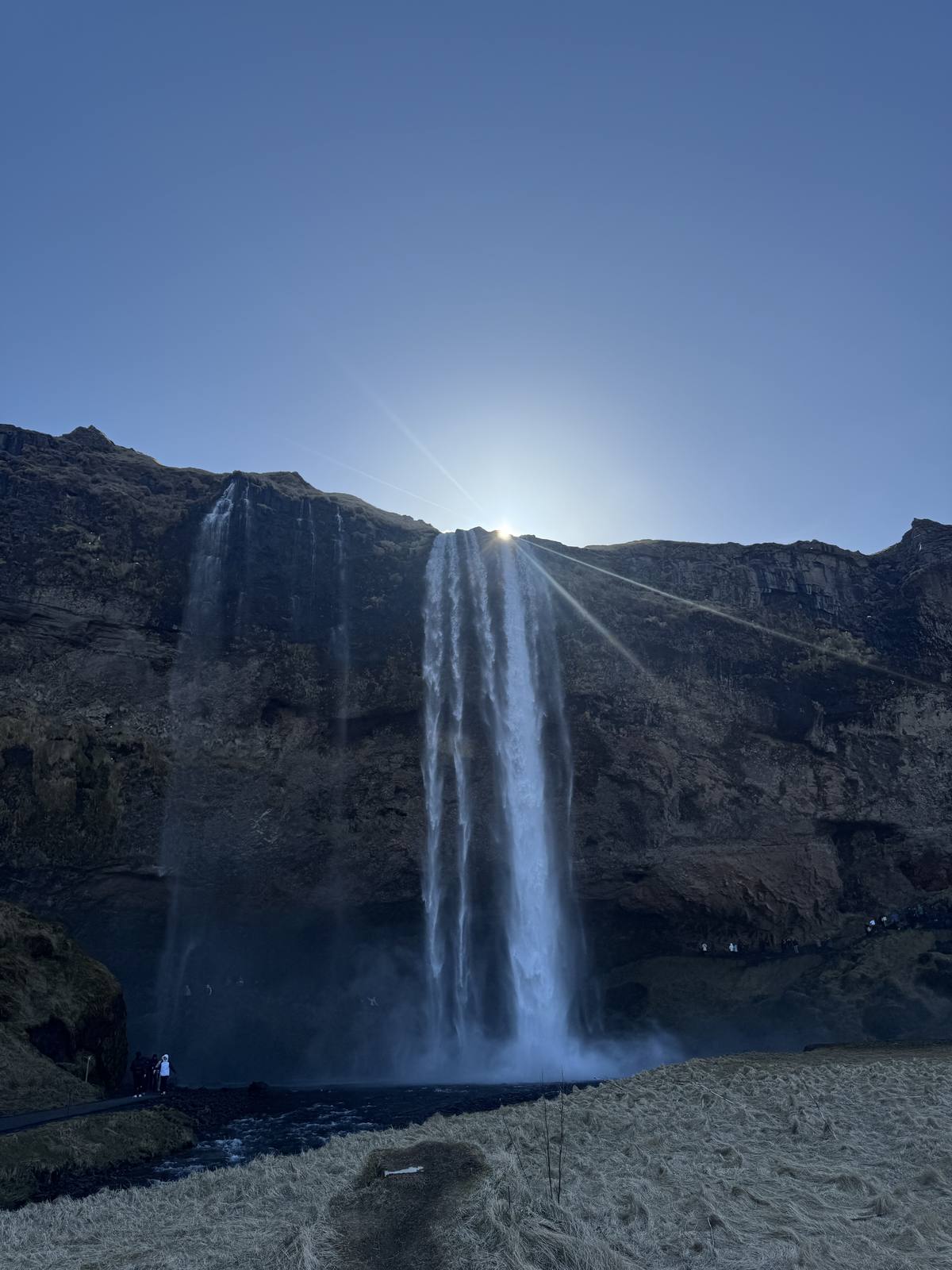
That same layer works all day, so pack for the whole route, not just the falls. If you have the energy at Seljalandsfoss, wander a few minutes along to the hidden fall tucked in its own mossy slot canyon. I wrote about walking behind Seljalandsfoss and finding Gljúfrabúi because most people miss it entirely, and it is one of my favorite quiet corners on the coast. Here is what to carry and what to leave in the hotel.
| Bring | Leave behind |
|---|---|
| A hooded, properly waterproof jacket | An umbrella, the wind will destroy it |
| Waterproof shoes or boots | Fashion sneakers and flip-flops |
| Warm mid-layers, even in summer | The expectation of a big sit-down lunch |
| Snacks, water, and a card or cash | A tight schedule, the weather sets the pace |
Why is Reynisfjara the thing people get most wrong?
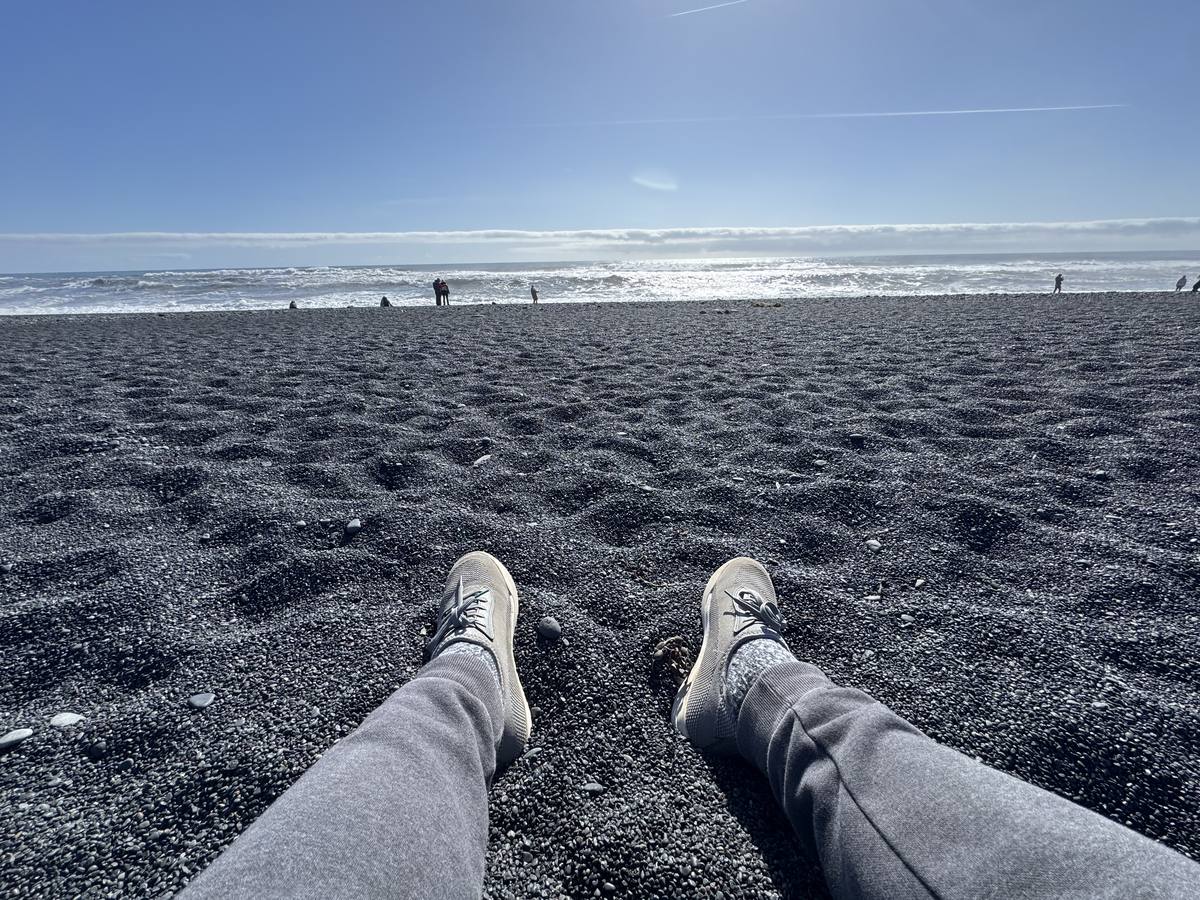
Treat the sea as the real hazard, not the scenery. Reynisfjara gets sneaker waves, single surges that rush far up the sand with no warning, and people have drowned here. Stay well back, never turn your back on the water, and do not climb the basalt columns or walk out toward the sea stacks.
If there is one paragraph here I want you to actually remember, it is this one. Reynisfjara, the black-sand beach near Vík, is stunning and it is dangerous, and the danger does not announce itself. That is not a line to sell caution. Iceland's safety service flags this exact spot, and if you want the official version before you stand on the sand, read safetravel.is first. From a safe distance the columns, the cave and the offshore stacks are extraordinary, and in summer you often get puffins on the cliffs. You lose nothing by standing back. I put the full detail in is Reynisfjara safe.
Is lunch included, and where do you eat it?
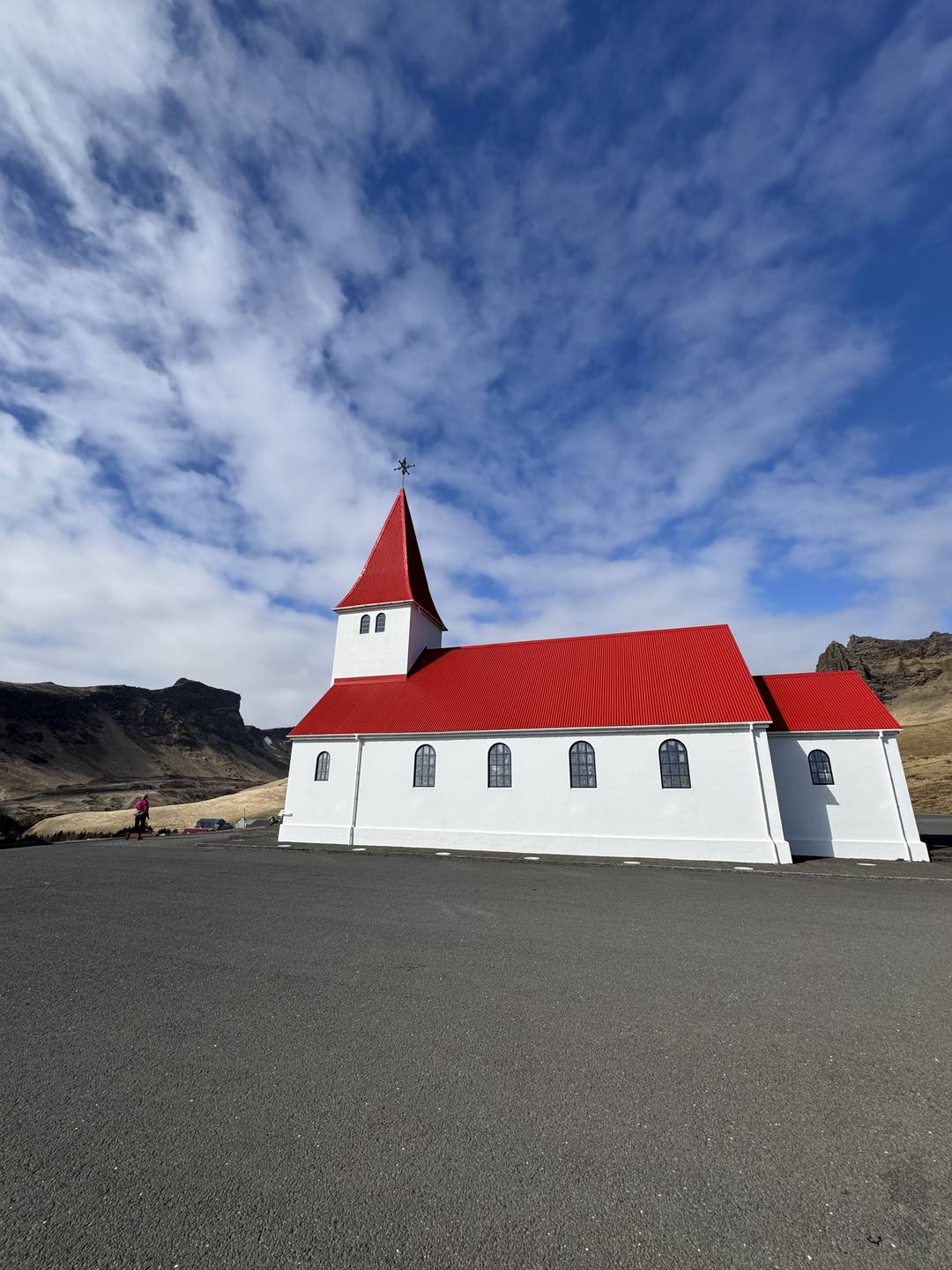
No, lunch is not included. The stop is in Vík, the village under the red-roofed church, and you buy your own food at the shop or a local cafe. Keep it quick and simple so you have time to walk up toward the church for the view over the black beach rather than losing an hour at a table.
People sometimes expect a meal to appear. It does not. There is a shop and a couple of places to eat, and the stop is long enough to sort yourself out without rushing. My advice is to keep it fast. A big sit-down lunch eats into the part of the day that is actually worth it. That church on the hill is more than a photo, by the way. It is the town's designated safe assembly point, and residents would have only minutes to reach it if the volcano under the ice cap erupted, a detail you can read more about on the Vík í Mýrdal page.
Where does the tour actually pick you up?
From designated bus stops in downtown Reykjavík only. Not your apartment door, not a suburban hotel, and never Keflavík Airport. If you are central you walk to your assigned stop; if you are further out, plan a taxi or an early bus into the middle of town. Cruise passengers are collected at the Skarfabakki terminal.
This one causes real stress on the morning of, so hear it now and save yourself the panic. If you are staying centrally you walk to your assigned stop. If you are staying further out, sort your transport into the center the night before. Every year a few people miss the bus because they assumed door service, and there is nothing anyone can do once it has rolled south.
Is a small minibus better than a big coach?
Yes, a small-group minibus beats a big coach almost every time. Capped at nineteen, it loads, parks and moves fast, which hands you more actual minutes at each stop. A fifty-seat coach burns those minutes at every transition, and across five stops the difference adds up to real time on your feet instead of in a queue.
This is an insider preference, and it comes down to time on your feet rather than time in a seat. The featured small-group South Coast tour runs a Mercedes minibus with WiFi and an English-speaking guide, and if you want to weigh the whole thing up I made the case in is the South Coast tour worth it. When you are ready, you can check the live dates and price on Viator, where the operator keeps availability current.
Does the glacier stop mean walking on ice, and how much does weather matter?
The glacier stop is a viewpoint, not an ice-walk. You stand near Sólheimajökull's tongue of ice, but crossing it needs crampons and a certified guide and is booked as a separate add-on. Weather also runs the day here, so a guide who reshuffles the order of stops around the conditions is worth a great deal.
So do not turn up expecting to lace up spikes. Standing near the tongue of ice is a genuinely strange, beautiful thing on its own. As for the sky, it changes fast. A morning that looks hopeless can clear by the beach, and a bright start can close in over the glacier. A good guide reads that, sees the black beach at its best rather than its angriest, and quietly saves your day. That flexibility is the difference between a trip you remember and one you endure.
Want the ice-walk after all? See live dates and prices for the guided glacier hike
★ 4.8 · 165 GetYourGuide reviews · Sólheimajökull: Guided Glacier Hike
How long is the South Coast day trip?
Around 10 hours, with a drop-off back in Reykjavík in the early evening. Roughly 5 hours of that is driving, spread across the day between stops, since Vík is about 187 km from Reykjavík along Route 1.
Is lunch included?
No. The lunch stop is in Vík, where you buy your own food at the shop or a local eatery. Keep it quick so you have time to enjoy the village and its church view.
Where does the tour pick me up?
From designated downtown Reykjavík bus stops only, not private apartments, suburban hotels or Keflavík Airport. Cruise passengers are collected at the Skarfabakki terminal. Walk to your assigned stop and arrive early.
Can I walk on the glacier?
Not on the standard day. Sólheimajökull is a viewpoint stop. Walking on the ice needs crampons and a certified guide and is booked as a separate add-on, so plan for it in advance if that is what you want.
Booking
Book The Day That Already Handles This List
Iceland South Coast Full Day Small-Group Tour
★ 4.8 · 6,610 Viator reviews · Your Day Tours
Every fix on this list is what the featured day tour sells: downtown pickup, a capped group of nineteen, a guide who reshuffles stops around the weather, and free cancellation up to 24 hours out.
- About 10 hours
- Max 19
- Free cancellation up to 24 hours before
Check Live Availability & Prices on Viator →
Affiliate link: if you book through it we may earn a commission at no extra cost to you. How this works.
Not sure which option fits? Answer 3 quick questions
General guidance, no answers needed: the featured small-group day fits most first visits to the South Coast. Pick a month and your priorities for a tailored pick, and confirm dates and restrictions on the listing.
Compare the other options (2)
Each is a separate Viator or Expedia booking, not part of the featured day tour.
Sólheimajökull Small-Group Glacier Hike — Crampons, helmet and a certified guide on the lower tongue of the glacier the day tour only views. ★ 4.8 · 565 Viator reviews · 3-4 hours
Katla Ice Cave Under the Volcano, from Vík — Super-jeep from Vík up under Mýrdalsjökull into the ice cave beneath the Katla volcano. ★ 4.7 · 1,193 Viator reviews · From Vík
Nail down the date now and the rest of this list takes care of itself: check availability and your pickup point on the listing in the same sitting.
Pick your date
Scheduled departure dates from the operator's Viator calendar. Availability for your date and the final price are confirmed on the listing.
Check Live Availability & Prices →The departure calendar could not load just now. Check dates and prices directly on the listing:
Check Dates & Prices on Viator →